
An Animated Guide to Flipper Skills in Pinball
Learn how to dead bounce, post pass, live catch, tap pass, Shatz, and more, with animated demos of every essential pinball flipper skill, beginner to advanced.

Nick C
The difference between a casual player and someone who can really play pinball comes down to the arsenal of flipper skills and techniques they have available when the ball arrives at the flippers. The skills animated here are arranged into difficulty levels based on my own experience. The difficulty levels are a topic of debate: “different strokes for different folks”.
Most of pinball is about knowing how to control the ball when it arrives at the flippers, and more often than not, that means doing nothing at all!
LEVEL 1: Passive moves and beginner basics
These techniques involve NOT flipping.
The Dead Bounce
The dead bounce is the most important passive flipper skill in pinball. When a ball is heading toward one flipper, you leave both flippers down. The ball hits the angled surface of the resting flipper and, because the flipper is stationary, it doesn’t bounce wildly. Instead, the energy transfers across the gap and the ball can then be controlled on the opposing flipper.
The key is to not flip at the ball. Leave both flippers down and let the geometry do the work. New players have a tendency to flip every time the ball reaches the flippers. Playing games one handed is a great way of training yourself out of the bad habit of panic flipping at every ball in range of the flippers.
If the bushings and flipper linkages are in good condition, a ball coming in from the upper playfield can often hop multiple times between flippers before losing enough energy to drain. In a tournament setting, you want to get a feel for how well a game dead bounces early in play.
The Nudge Assisted Dead Bounce
Sometimes the ball doesn’t have enough energy to make it all the way across the gap between the flippers on its own. It rebounds off the lowered flipper but drops down the middle into the drain before reaching the other side.
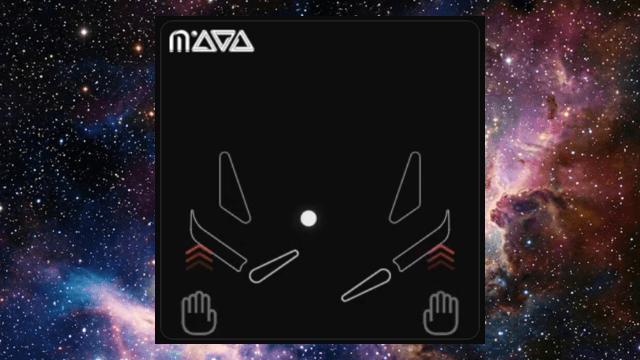
This is where the most basic pinball nudge comes in. A quick, well-timed push forward on the lock bar transfers force through the machine and into the flipper surface, giving the ball just enough extra energy to complete the crossing. You’ll see the nudge visualised as upward chevrons at the bottom corners, representing the player’s hands pushing the cabinet.
Timing is everything. Too early and the ball hasn’t left the flipper yet. A premature nudge can put the ball off its smooth trajectory and make the situation worse. Too late and it’s already falling past the point of no return. The speed and power required of the nudge comes with experience but don’t be afraid to nudge games. It’s one of the pure kinetic joys of pinball that make it unique from other arcade games and is one of the primary axes of control. Pinball machines ARE MADE TO BE NUDGED. The tilt bob is there to tell you if you’ve gone too far.
LEVEL 2: Catches and active transfers
These intermediate pinball flipper techniques require active flipper input rather than letting the ball do the work.
The Drop Catch
The drop catch is an active way to kill the ball’s momentum and gain control in pinball. It’s useful if a ball is coming towards the flipper that you want it on, but it is approaching too fast for a simple cradle. It can also be useful if a ball is coming in so fast that you’re worried leaving the flipper for a dead bounce could result in an out of control situation.
Here’s how to do it. The ball is heading toward a flipper that you’re holding up. Just as the ball arrives, you release the flipper button. The flipper drops away from the ball while the ball is in contact, damping the energy. If executed perfectly the ball barely bounces, almost stopping dead on the lowered flipper. The ball will then begin to roll down the flipper, so you can’t typically use this technique for a cradle. You can, however, gain enough control to make a targeted subsequent shot up the playfield.
The timing, as with most moves in pinball, is important. Release too early and the flipper is already down when the ball arrives resulting in an accidental dead bounce. Release too late and the ball has already ricocheted off the upright flipper.
Often, the outcomes of failed execution of the drop catch aren’t too bad. The animation shows a successful execution, and also a failed execution resulting in a dead bounce. The relatively low stakes of this move are in contrast to the alternative technique, which makes a nice segue to …
The Live Catch
The live catch takes the drop catch idea and inverts it. Instead of dropping a held flipper, you bring a resting flipper up to meet the ball at just the right moment. In slow motion you can see the flipper rubber actually stretch off the rigid bat by a small amount, meet the ball, and compress and absorb the ball’s energy as the flipper rises into it. Get the timing right and the ball can look as if it sticks like glue for a fraction of a second. It’s an incredibly satisfying catch to make, and is particularly useful if the ball is coming in hot or from a more diagonal angle across the playfield. The main benefit, if executed well, is the ball will drop to cradle giving the player a myriad of options for the next shot, and also time to think and plan.
It is a bit of a double edged sword though. Activating the flipper is putting more kinetic energy into the game compared to releasing the flipper and allowing the return spring to bring the bat back. Get it wrong and you’ve flipped the ball at full power in a random direction. Even if you don’t whack the ball in a random direction, you could accidentally execute something resembling a high power post pass and end up in crazy town between the slingshots (as the animation shows).
This is a higher risk move than the drop catch, but is favoured by experienced players if the machine allows it, because you end the move in a more guarded cradle position. This concept leads us nicely into Guarding.
Guarding
When the ball is pinging side to side off the slingshots, it can feel like you’ve lost all control. This animation follows on from the failed live catch and shows how control can be regained from a slingshot volley. With the flippers down, the ball can hit the lower inactive parts of the slingshots and find the gap straight down the middle. Instead, you guard: hold up whichever flipper is on the same side as the ball. When the ball crosses to the other side, you switch. The flipper tracks the ball like a shield and blocks a low rebound to the centre.
Rather than panicking and mashing both buttons, you stay calm and follow the ball, keeping one flipper raised at all times until the action settles down and you can regain control.
The Post Pass
The post pass looks fancy at first glance, but on many games it can be quite easy to execute. With the ball trapped on one flipper, you release and flip again in a short space of time like an over-exaggerated back hand shot. The ball then rebounds off the rubber curved around the lower part of the slingshot and transfers over to the other flipper.
This is how you move the ball from one flipper to the other when you need a different shot angle. The geometry of some games makes this move hard or near impossible. On other games you have huge margin for error. It’s definitely one of the tests you should do on any practice period you get on games in a competitive environment. Can I post pass easily? Or is it a risky manoeuvre?
The Ski Pass
The ski pass is a controlled transfer of the ball from one flipper to the other if the ball has enough momentum to allow it. If a ball is travelling cleanly down the inlane and you want a flipper transfer for your next shot, simply hold the flipper up and let the physics do the work.
The key is anticipation. You need the flipper raised before the ball gets there. If you flip as the ball arrives, you’ll launch it back up the playfield instead of transferring it.
If the ball is travelling up the flipper and looks like it is not going to make the gap, you have a number of options to manage the situation.
The Nudge Assisted Ski Pass
So the setup for the ski pass looks good, but maybe you realise you misjudged the speed of the ball, or maybe the ball gets slightly snagged in the gap between the lane guide and the bat on the approach. You quickly realise that without some intervention, the ball isn’t going to make the transfer to the other bat. Fear not!
One option is to use a nudge if the tilt bob isn’t too sensitive. With the bat held up wait for the ball to get near the tip and then apply force pushing the game away from you with the palms of your hands while covering the flipper buttons with your fingers. Often this can give the ball just enough extra hop to clear the gap, or travel far enough that you don’t need to save the ball with a reflexive flip or slap save on the other side of the transfer.
If you watch top level players on streams during tournaments, you will notice them constantly making small nudges to position the ball exactly where they want on the flippers.
With all nudges we are trying to move the game under the ball. A pinball is quite heavy and carries a fair bit of momentum, and so a sharp impulse actually moves the table under the pinball and not the pinball itself directly. Pushing the table from the front pushes the flipper bat into the ball when you’ve already run out of flipper travel.
With experience you’ll find you need to give the machine more of a forceful nudge from the front than from the sides. Conversely, once you start slap saving the game from the sides the tilt bob will begin to swing more violently and warnings can quickly turn into tilts. The distance between the legs is greater from the front of the game to the back than it is from side to side. Therefore the machine is more stable in this axis, so nudges from the front need a bit more force to move the playfield under the ball than nudges from the side. More plainly, the table is more wobbly side to side compared to front to back.
LEVEL 3: Micro flipping
These intermediate to advanced pinball skills exploit the fact that the player can control the duration of the flip.
The Tip Pass
The tip pass, sometimes called a micro flip (or “teps” if you’re from around these parts), is the easier-to-execute cousin of the tap pass. It is the easiest of the micro flip family of moves, and tends to work after a little practice even on modern games with high powered flippers. The ball is rolling down the inlane toward a held flipper, but it doesn’t have enough speed to clear the gap on its own. As the ball rolls along the flipper toward the tip, you release the button for a split second and then re-engage it. That tiny drop-and-engage gives the ball just enough of a kick at the tip to send it across to the other flipper.
This can be really useful if a nudge really won’t cut the mustard, and you need that extra bit of energy from the flipper coil. As a flipper move, it can be slightly less predictable than a skilful nudge. Experienced players will judge in any situation if a micro flip or a nudge is the best course of action. It is good to have both techniques in your arsenal.
Like with all the ski pass family of moves, once the ball is off the end of the flipper, you’re at the mercy of whatever momentum the ball had. The animation shows a successful tip pass, and also a missed opportunity.
The Tip Backhand
The tip backhand is like a cancellation of a ski pass. You do a similar micro flip as with a tip pass, but a fraction early, before the ball reaches the tip. Like with the post pass, it is an exaggerated backhand shot, but with much less energy because of the short duration of the input.
To the untrained eye, it looks like a mistake, but it can be a useful and deliberate way to kill a ball that’s rolling too slowly to do anything useful with. Equally, it can be used to completely abort a ski pass that would have made it across the gap if the next shot you want is from the flipper you are on and you want to get to a controlled cradle.
LEVEL 4: Alley passing
These advanced pinball flipper skills move up the risk / reward ladder!
The Shatz
The Shatz, also known as the alley pass, is a way to move the ball from a flipper to the opposite inlane, with enough force to trigger the switch in the opposite inlane. With the ball trapped, you drop the flipper and let the ball roll toward the tip, then give it a flip. The ball launches across the playfield and up the opposite inlane.
It takes confidence. You need to let the ball roll far enough down the flipper to get a good launch angle off the curved tip of the bat, but not so far it drops off the end.
Why on earth would you do this? Mistiming this comes with consequences! It’s definitely easier to execute on some older games where the lowered powered flippers give a tiny bit more room for timing errors. One of the classic examples of using the Shatz is on the Williams’ legendary classic, Gorgar. In this game, the inlane switches are the safest way to build up the playfield bonus high enough to light the spinner shot for big points.
The Shatz can be a dangerous move unless you have excellent coordination, consistency, and ability to read the game.
The Rolling Shatz
The rolling Shatz is the same idea but with a ball already in motion. The ball comes screaming down the lane just like a ski pass, but instead of holding the flipper up to transfer it, you leave it down. As the ball reaches the tip of the flipper you snap it up, launching the ball across the playfield and up the opposite inlane.
The timing window is tiny. Too early and you catch the ball off the flat of the bat, launching it up the playfield with a precarious amount of sideways energy, or potentially worse, into the opposing slingshot. Too late and it rolls off the end of the flipper into the drain. Some high-ranking players are able to maintain Shatz volleys alternating left and right. Not something within the reach of most of us mere mortals. However, find a classic game without a razor thin timing window and it can certainly be fun to learn!
LEVEL 5: Advanced Tap Techniques
Expert timing can yield expert control.
The Tap Pass
Moving higher up the skill ladder we have the tap pass!
The tap pass is a subtler way to move the ball between flippers. With the ball cradled on one flipper, you drop it and let the ball start rolling toward the tip. Then you give the flipper button the lightest, quickest tap. The flipper barely moves, just enough to give the ball a gentle nudge across to the other side.
This is useful when a full post pass feels too risky, maybe the ball has too much energy or the timing is tight. The tap pass keeps everything low and controlled.
However, the room for error is huge! Tapping too fast can lead to the bat not moving at all. I’ve seen people many times try and tap so fast that they miss the flipper button entirely and subsequently humiliatingly watch the ball just drain down the middle. On a stream this looks like the player just forgot to flip! The other error is tapping a fraction too long and yeeting the ball into orbit.
If you want to try it, find a classic game with a slower flipper response, at least to begin with: something pre DMD. I personally find tap passing on a modern game near impossible, and certainly impossible with any kind of consistency to even dream of doing it competitively. You’ll find videos online of the top players in the world doing seemingly crazy tap passes in high stakes games!
The animation shows the tap pass, but also how micro flips can be used to calm the ball after a transfer, in a similar way to the tip cancel.
The Rolling Tap Pass
The rolling tap pass is pretty much the apex of single ball flipper skills. It is all the timing perfection of the tap pass coupled with having to read the dynamic situation of the moving ball.
If you see these executed live in tournaments, you will normally get gasps from onlookers watching the big screens and nervous laughter of disbelief from the competitors watching the mastery in progress.
Wrapping up
All the pinball flipper skills demonstrated here can be used in combination. Have fun trying them out. Remember that different pinball games respond differently and some techniques will work better on some games than others. Even identical models of pinball machines may be in different states of repair, and so you need to adjust your techniques to adapt to each game. However, the almost organic kinetic nature of real pinball is what sets it apart from all other electronic entertainment today, and that is one of the many reasons that we love it so much.
If you enjoyed this post, let us know, and we’ll produce an animation series for similar techniques that are specific to multiball play. Similarly, let us know if we missed anything you think should be included. Happy flipping!
Share this post
Like this post? Share it with your friends!